

Last Updated: November 1, 2026
Quick Summary
A freestyle alternative for diabetes monitoring is a continuous glucose monitor that fits your routine better, such as one with a different wear time, stronger water resistance or more reliable alerts. Compare sensor wear time, alerts, app compatibility, monthly cost and prescription status before switching, and check the change with your care team first.
- Write down the specific problem with your current device before looking at alternatives.
- Compare wear time, alerts, app compatibility, monthly cost and prescription status.
- The GS3-R is listed at £48.00 for a single unit, £85.00 for the X 2 bundle and £120.00 for the X 3 bundle.
- A CGM measures interstitial fluid, so readings can lag behind a finger-prick test.
- Speak to your care team before switching, and keep your old supplies until the new system is confirmed.
Table of Contents
- Why People Look for a FreeStyle Alternative
- FreeStyle Libre Alternatives: What Your Options Look Like
- Flash Glucose Monitoring vs Continuous Glucose Monitoring
- How Accurate Is a CGM Sensor Compared With Finger-Prick Tests?
- Wear Time, Water Resistance and Connectivity for Active Users
- Cost, Prescriptions and Who the Device Suits
- How to Switch Glucose Monitoring Systems Safely
- Booking a Review of Your Monitoring With Your Care Team
- Frequently Asked Questions
Choosing a continuous glucose monitor is a different decision from choosing a finger-prick meter, and many people only realise how different once they start comparing devices. The question usually isn't just which brand reads most accurately. It's how the sensor fits your routine, how often you need to replace it, and whether the readings reach the people who need them. This guide walks through the options and the trade-offs, so you can judge what suits your situation. (Source: National Institute for Health and Care Excellence (NICE) guidance)
A continuous glucose monitor (CGM) is a small sensor worn on the skin that measures glucose in the interstitial fluid beneath it and sends readings to a phone or reader (NICE). Unlike a finger-prick test, it gives you a running trend rather than a single snapshot. That trend is what most people find useful day to day.
Why People Look for a FreeStyle Alternative
Most people who search for a freestyle alternative for diabetes monitoring are not unhappy with glucose monitoring itself. They are looking for something that fits their life better. Common reasons include wanting a different wear time, needing better water resistance for swimming or exercise, wanting alerts that reach a phone reliably, or simply comparing cost against what they are prescribed.
Before switching, it helps to write down what is not working. A specific problem, such as sensors falling off during sport or alerts that arrive late, points you toward the features that matter. A general feeling that another device might be better rarely does.
FreeStyle Libre Alternatives: What Your Options Look Like
The Sibionics GS3-R is one device that people compare against other systems. It is a continuous glucose monitor with an ultra-thin sensor, sold as a one-time purchase at £48.00 for a single unit, £85.00 for the X 2 bundle and £120.00 for the X 3 bundle. The product listing describes up to 14 days of monitoring, Bluetooth data transmission, customisable high and low alerts, and IP38 water resistance suitable for showers and short swims.

The listing also states what the device does not do. It is not a replacement for medical advice or emergency care, and wear time and accuracy depend on correct application. Read those limits alongside the features, not after them.
When comparing any alternative, check these points against your own needs:
- Wear time: how many days each sensor lasts before replacement
- Alerts: whether high and low alerts are customisable and how they reach you
- Compatibility: which phone systems the app supports
- Cost per month: the sensor price multiplied by how often you replace it
- Prescription status: whether your care team can provide the device
The article's own figures for the device it discusses are summarised below, so you can compare them quickly.
Item |
Value |
Note |
|---|---|---|
Single unit |
£48.00 |
One-time purchase |
X 2 bundle |
£85.00 |
One-time purchase |
X 3 bundle |
£120.00 |
One-time purchase |
Wear time |
Up to 14 days |
Per the product listing |
Water resistance |
IP38 |
Suitable for showers and short swims |
Flash Glucose Monitoring vs Continuous Glucose Monitoring
Flash glucose monitoring and continuous glucose monitoring are related but not identical. Flash systems typically read glucose when you scan the sensor, while continuous systems send readings automatically and can alert you without a scan. For people who need alerts overnight or during activity, that difference often decides the choice.
Continuous systems usually provide more information about trends. Flash systems can suit people who prefer to check on their own schedule. Neither is better in every case, so match the system to how you actually use your readings.
How Accurate Is a CGM Sensor Compared With Finger-Prick Tests?
A CGM measures glucose in interstitial fluid, not blood, so its readings can lag behind a finger-prick test, particularly when glucose changes quickly (the NHS).
The product listing for the GS3-R quotes a MARD value of 8.7%. Check the official product information for the study conditions behind that figure.
If a reading does not match how you feel, the listing advises a finger-prick test with your blood glucose meter. Do not ignore symptoms that may be due to low or high glucose, and seek medical attention when appropriate.
Sibionics GS3-R Continuous Glucose Monitor (CGM) →
Reading the MARD Figure
MARD stands for mean absolute relative difference. It measures the average gap between a sensor reading and a reference blood measurement, expressed as a percentage. A lower MARD generally means closer agreement with blood tests, but it does not tell you how a sensor performs during rapid changes or at extreme readings. Compare MARD figures only when they come from the same kind of study.
Wear Time, Water Resistance and Connectivity for Active Users
If you swim, run or hike, check the device's water resistance and how it attaches. For a deeper look at CGMs for active adults, see what suits swimming, running and hiking. The GS3-R listing gives an IP38 rating and describes it as suitable for showers and short swims. Our guide to waterproof continuous glucose monitors for active lifestyles explains what water resistance ratings mean in practice. That is not the same as being designed for prolonged immersion, so ask before using it for long sessions.
Connectivity matters just as much when you are active. Confirm that the app works with your phone and that alerts will reach you during exercise. A device that drops its connection mid-run is of little use when you need a warning.
Cost, Prescriptions and Who the Device Suits
Cost is often the deciding factor. Work out the monthly cost by dividing the sensor price by the number of days it lasts, then add any reader or app costs. Ask your care team whether the device can be prescribed, since prescription status changes what you pay.
Coverage rules differ between services and change over time, so check current eligibility with your care team and official sources rather than relying on this article. Our NHS coverage guide for continuous glucose monitors outlines the current position for UK readers. Whether a device suits you also depends on your diabetes type, whether you use insulin and your care plan. Individual decisions belong with a qualified clinician.
How to Switch Glucose Monitoring Systems Safely
Switching systems is safest when it is planned, not rushed. Do not stop your current monitoring before the new device is working.
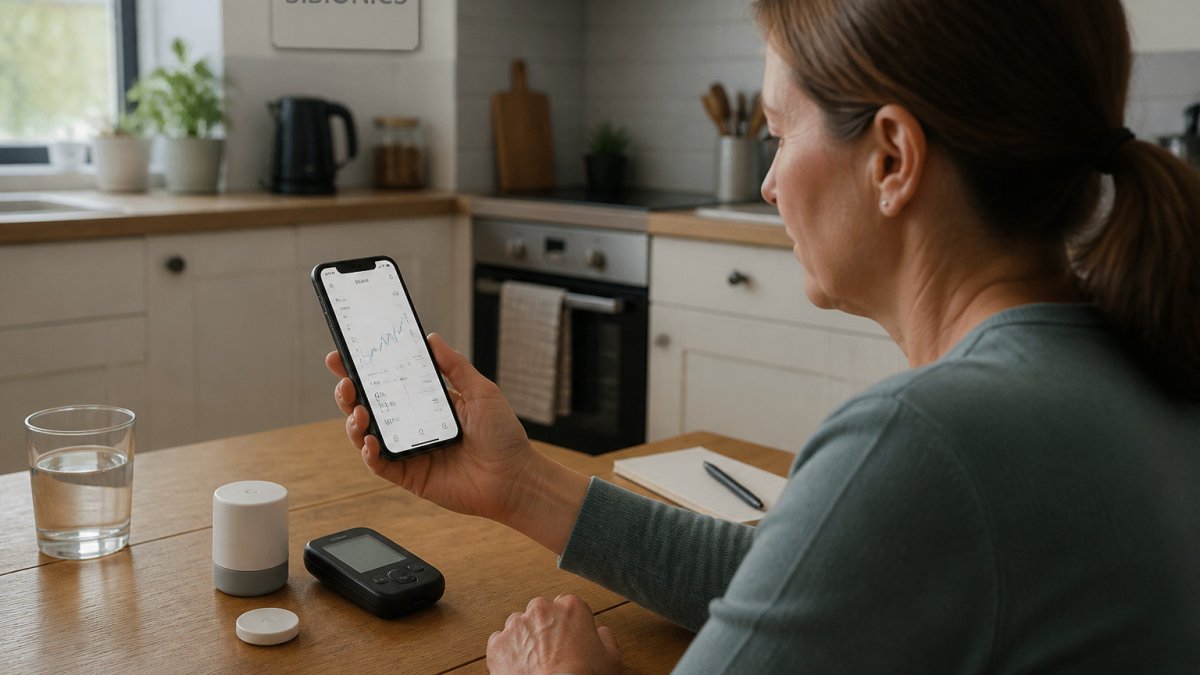
A practical sequence looks like this:
- Speak to your care team before changing devices.
- Set up the new app and confirm your phone is compatible.
- Apply the new sensor and check the first readings against a finger-prick test.
- Test your alerts so you know they arrive.
- Keep your old supplies until the new system is confirmed.
Set up and test your alerts before you rely on them. The guide to reliable real-time glucose alerts walks through setup and troubleshooting step by step.
Watch out: Do not change your insulin or medication dosing based on a new device's readings without advice from your care team.
Booking a Review of Your Monitoring With Your Care Team
The most useful next step is a review with the clinician who manages your diabetes. Bring your current readings, any patterns you have noticed, and a list of the features that matter to you. Ask whether a different system suits your type of diabetes, how it would be prescribed, and how to switch safely.
Write your questions down before the appointment. A short, specific list helps the review stay on what affects your daily life.
Frequently Asked Questions
What alternatives are available to FreeStyle Libre for glucose monitoring?
The Sibionics GS3-R continuous glucose monitor is sold as a single sensor for £48.00, as an X 2 bundle for £85.00, and as an X 3 bundle for £120.00. It transmits readings by Bluetooth to a compatible Android or iOS app and offers up to 14 days of monitoring per sensor. Compare the wear time, sensor price, app compatibility and water resistance against your current system, and confirm the choice with your diabetes care team before you switch.
How do continuous glucose monitors differ from flash glucose monitors?
Both systems measure glucose in the interstitial fluid under the skin using a small sensor. Continuous systems stream readings and alerts automatically, while flash systems usually need the sensor to be scanned to show a reading. The practical difference is how often you receive data and how alerts are delivered, so check which features matter most for your daily routine and your alert needs before choosing.
How accurate are continuous glucose monitoring systems?
The Sibionics GS3-R lists a MARD value of 8.7%, which describes the average difference between sensor readings and reference measurements. A lower MARD indicates closer agreement, but it is not a guarantee for every reading. The product guidance says to do a finger-prick test with your blood glucose meter if readings do not match how you feel, and to seek medical attention when appropriate.
Information in this article is general. Speak to your healthcare professional before changing your monitoring or treatment.
